
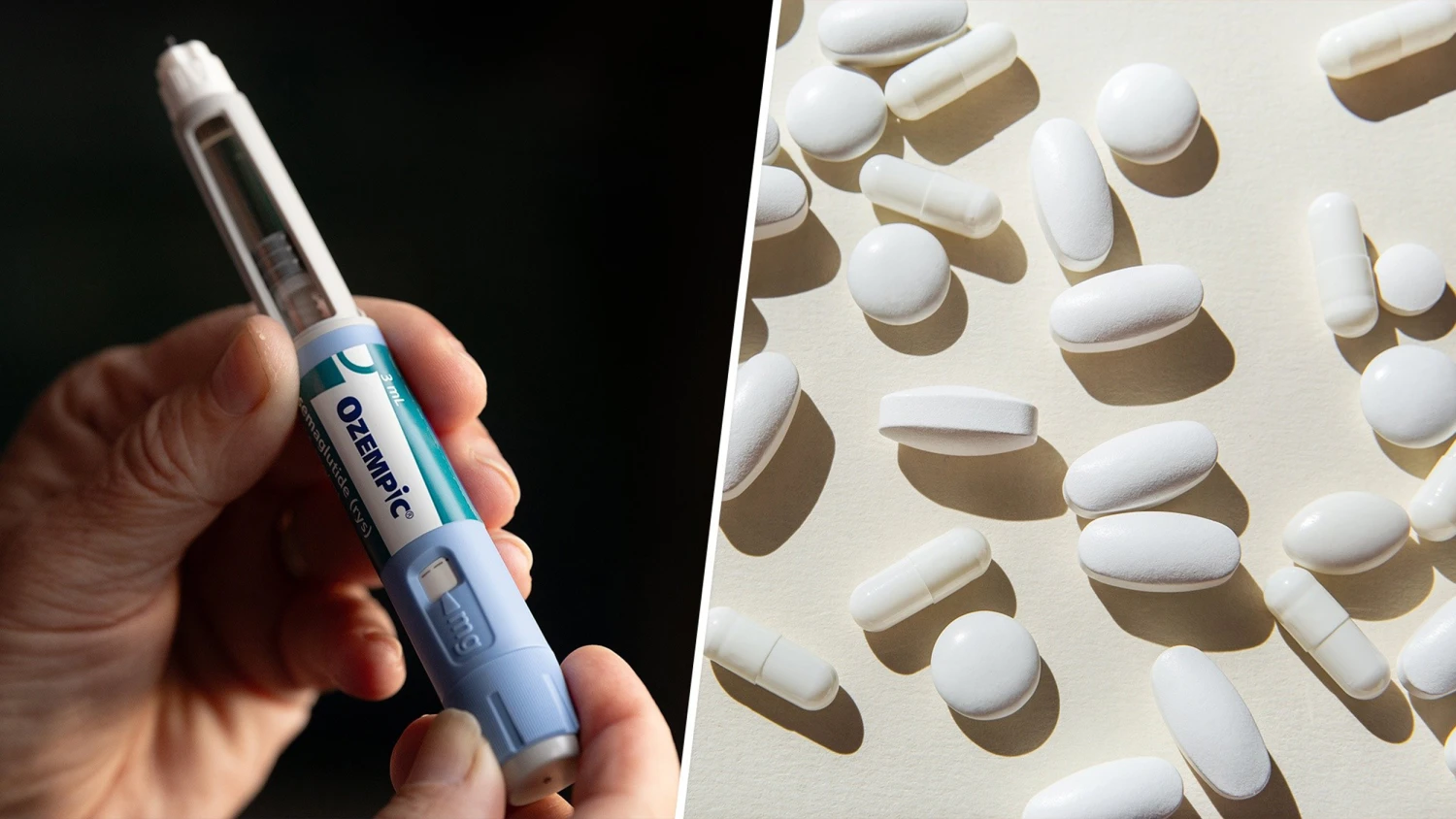
Ozempic is a name most people will recognise. The injectable drug became one of the most talked-about medicines of the last decade, originally developed for type 2 diabetes before it was widely used for weight loss. But a fundamental problem has always existed with drugs like it: they require a weekly injection. For millions of people, that is a significant barrier - whether due to needle phobia, the cost of clinical infrastructure, or simply the inconvenience of a cold-chain drug that must be refrigerated.
GLP-1 drugs work by mimicking a hormone the gut naturally releases after food is consumed. That hormone signals to the brain that the body is full and prompts the pancreas to release insulin. The Pharmaceutical companies have spent years trying to replicate this effect in a pill rather than an injection - and in 2026, two of the world’s biggest drug companies have finally done it.
In December 2025, Novo Nordisk - the Danish company behind Ozempic and Wegovy, became the first to receive FDA approval for an oral GLP-1 pill for obesity, marketed simply as oral Wegovy. 1 Then, on 1 April 2026, Eli Lilly received FDA approval for its own oral GLP-1, orfglipron, branded as Foundayo. 2 Within the space of a few months, a market that had been dominated by injections suddenly had two competing daily tablets.
Think of it like the early smartphone era - one company breaks the mound and within months a rival arrives with a comparable product. The race is now about who wins market share, not who gets there first.
They are close, but not identical. In clinical trials, Novo’s oral Wegovy produced slightly higher average weight loss (13.6%) compared to Foundayo (12.4%) after roughly 72 weeks. 3 However, in a head to head trial comparing the two drugs in people with type 2 diabetes, Foundayo came out ahead on blood sugar control, reducing HbA1c (a key diabetes marker) by 2.2 percentage points versus 1.4 for oral Wegovy. 4
However, there is a trade off. People taking Foundayo were more likely to stop treatment due to gastrointestinal side effects such as nausea, around 9.7% discontinued, compared to 4.9% on oral Wegovy. 4 In medicine, a drug is rarely simply “better” or “worse”, it depends on what a patient needs most and how their body responds.
One particularly interesting finding: a trial called ATTAIN-MAINTAIN showed that patients who switched from injectable Wegovy or Lilly’s own injectable Zepbound to oral Foundayo were able to maintain the weight they had already lost. 5 This matters because it suggests the pill could act as a long term maintenance option for people already on injectable therapy – making treatment more sustainable and accessible over time.
Accessibility is the key word here. Injectable GLP-1 drugs have faced persistent shortages since demand exploded, news reports of patients being unable to get their Ozempic prescription filled. Pills are far simpler to manufacture at scale, require no refrigeration, and can be taken at any time of day without food or water restrictions. 2 Eli Lilly has already stated it faces no supply constraints for Foundayo, a direct response to years of injectable shortages.
Pricing is also shifting. Novo Nordisk announced in early 2026 that it would halve the list prices of its semaglutide products in response to competition – oral Wegovy launched at $149 per month in the US. 1 When two pharmaceutical giants compete directly, prices tend to fall and access tends to improve, a dynamic that benefits patients most of all.
For the industry, analysts at GlobalData project Foundayo alone could generate $14.1 billion in annual revenue by 2031. 6 To put that in context, that would make it one of the best-selling drugs ever. The GLP-1 market is not just a health story, it is one of the most consequential commercial battles in pharmaceutical history, and understanding it offers a clear window into how drug development, regulation, and competition shape medicine.
Managed Healthcare Executive (2026) GLP-1 pills for weight loss: the race is on, 25 April. Available at: https://www.managedhealthcareexecutive.com/view/glp-1-pills-for-weight-loss-the-race-is-on (Accessed: 30 April 2026).
Eli Lilly and Company (2026) Lilly receives FDA approval for Foundayo (orforglipron), an oral GLP-1 for obesity, Press release, 1 April. Available at: https://investor.lilly.com/news-releases/news-release-details/lillys-oral-glp-1-orforglipron-demonstrated-statistically (Accessed: 30 April 2026).
Clinical Trials Arena (2025) Eli Lilly’s oral GLP-1RA hits endpoints, but trails Novo’s Wegovy in weight loss, 7 August. Available at: https://www.clinicaltrialsarena.com/news/eli-lillys-oral-glp-1ra-hits-endpoints-but-trails-novos-wegovy-in-weight-loss/ (Accessed: 30 April 2026).
BioPharma Dive (2026) Lilly’s GLP-1 pill tops Novo’s Rybelsus in head-to-head trial, 26 February. Available at: https://www.biopharmadive.com/news/lilly-orforglipron-rybelsus-diabetes-study-results-glp-1/813209/ (Accessed: 30 April 2026).
Eli Lilly and Company (2025) Lilly’s orforglipron helped people maintain weight loss after switching from injectable incretins, Press release, 18 December. Available at: https://www.prnewswire.com/news-releases/lillys-orforglipron-helped-people-maintain-weight-loss-after-switching-from-injectable-incretins-to-oral-glp-1-therapy-in-first-of-its-kind-phase-3-trial-302645471.html (Accessed: 30 April 2026).
Pharmaceutical Technology (2025) Novo beats Lilly to first FDA-approved GLP-1RA pill for obesity, 23 December. Available at: https://www.pharmaceutical-technology.com/news/novo-beats-lilly-to-first-fda-approved-glp-1ra-pill-for-obesity/ (Accessed: 30 April 2026).