
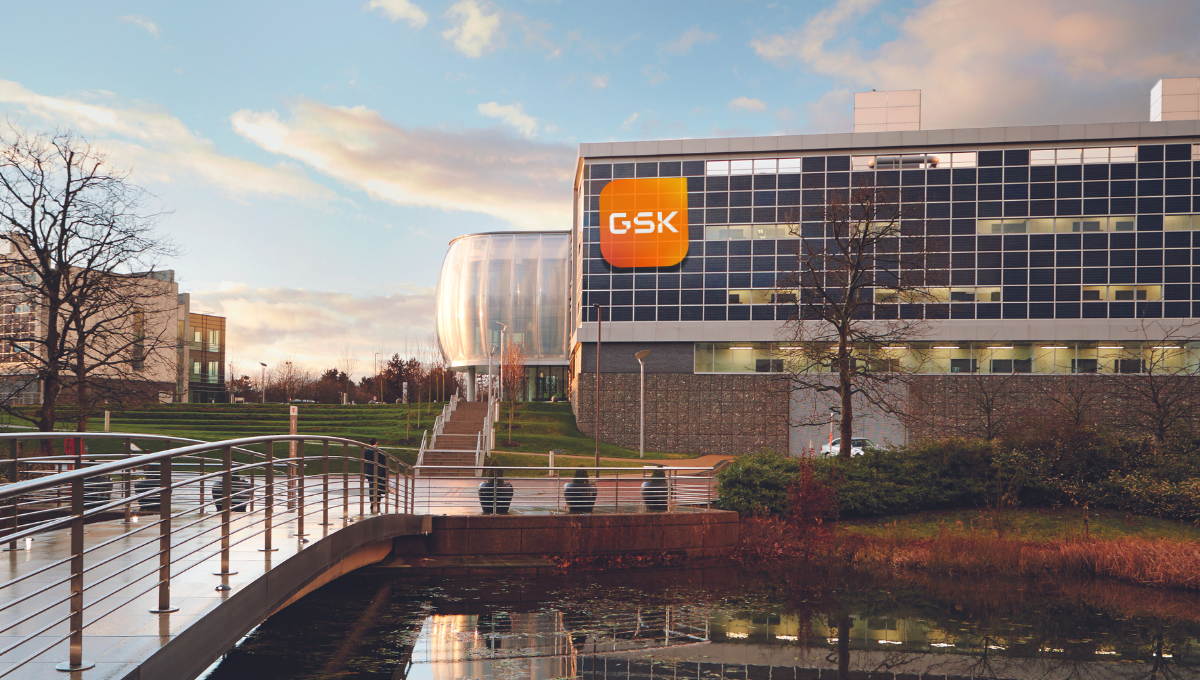
GlaxoSmithKline (GSK) is entering a new era as Chief Executive Officer Emma Walmsley prepares to step down at the end of 2025 after eight years in charge. She will be succeeded by Luke Miels, the company’s Chief Commercial Officer, on 1 January 2026¹. Although the announcement surprised some observers, GSK’s board presented it as a planned succession designed to steer the company through its next phase of growth.
When Walmsley became CEO in 2017, she brought a consumer-health background from L’Oréal² and GSK’s own consumer team. Her strategy focused on structural transformation, most notably spinning off consumer health (Sensodyne toothpaste, Panadol Painkillers) into Haleon. This separate entity allowed GSK to refocus as a pure biopharma company. She streamlined the R&D portfolio around real winners in respiratory, immunology, oncology, and vaccines. Under her leadership, GSK launched key products such as Shingrix, the shingles vaccine, and Arexvy, the first approved RSV vaccine. She also increased GSK’s annual R&D investment to about £6.4 billion in 2024³. Critics argued that Walmsley’s non-scientific background slowed innovation and left gaps in the pipeline, prompting investors to push for bolder bets. Even so, she leaves GSK financially stronger and strategically clearer than when she started. She still serves as a symbol of a female leader in a very male-dominated environment, letting her results speak for themselves.
Miels’ appointment signifies a shift towards scientifically grounded, execution-driven leadership. A biology graduate, Luke Miels built his career across major pharmaceutical companies, holding senior commercial and operational roles at AstraZeneca, Roche, and Sanofi. In 2017, Luke joined GSK and the Global Leadership Team. As Chief Commercial Officer, he oversaw the company’s worldwide portfolio of medicines and vaccines. In this role, he was instrumental in shaping GSK’s commercial strategy, strengthening its speciality medicines division, and preparing the business for its next phase of growth. His promotion aligns with GSK’s pivot towards speciality pharmaceuticals and its need for science-oriented leadership.
Pipeline and R&D delivery: Miels inherits an ambition to launch roughly fifteen new medicines by 2031⁴ across HIV, oncology, and respiratory, with the aim of significantly increasing annual sales. Expect tighter capital allocation, faster advancement of high-potential assets, and stronger regulatory readiness.
Speciality medicines and vaccines: Oncology and immunology will remain core, alongside the expansion of successful vaccine franchises like RSV and Shingrix.
Global expansion: A commercial strategist at heart, Miels will aim to strengthen GSK’s U.S. footprint and scale selectively in faster-growing markets. The company has also signalled sizable U.S. R&D and manufacturing investment over five years⁵.
Financial discipline: Building on a cleaner balance sheet, he is likely to pursue targeted biotech M&As and partnerships, acquiring companies that expand GSK’s product range and inject fresh innovation. This emphasis on financial discipline will provide a sense of security about the company’s economic future.
One major challenge is the loss of patent exclusivity for key products, most notably dolutegravir (treatment for HIV) in 2028, which pressures revenue and increases the urgency of replacement launches. Competition is fierce, including in obesity medicines, where GSK currently lacks a beachhead. After COVID-19 vaccine stumbles, expectations for innovation are high. To meet them, Miels must lean into technologies such as mRNA and long-acting antibodies while adopting AI-enabled discovery to compress timelines. External pressures from unprecedented factors, like regulatory scrutiny and geopolitical volatility, will complicate the execution and management of capital. These challenges are not unique to GSK but are part of the broader landscape of the pharmaceutical industry.
GSK’s handover from Walmsley to Miels marks a shift from structural rebuilding to science-led acceleration. Walmsley clarified the purpose and sharpened the focus. Miels’ new focus is to convert that groundwork into outperformance through a faster, more productive pipeline. If he delivers, GSK can close the gap with top peers and reassert leadership in vaccines and speciality medicines. If not, GSK will continue to fall behind in pipeline execution compared to competitors like AstraZeneca and Pfizer. Execution speed will matter more now. The next chapter hinges on turning a leaner GSK into a faster GSK.
Platinummediagroup.co.uk. (2025). Big Story: Dame Emma Walmsley - Platinum Media Group. [online] Available at: https://www.platinummediagroup.co.uk/dynamic/2025/02/big-story-dame-emma-walmsley/#:~:text=Upon leaving university%2C Walmsley worked at the,where she held various general management and [Accessed 14 Oct. 2025].
Firstwordpharma.com. (2025). Available at: https://firstwordpharma.com/story/5981702 [Accessed 14 Oct. 2025].
GSK plc (2025) Luke Miels appointed CEO designate for GSK. Press release, 29 September. London: GSK. Available at: https://www.gsk.com/media/ohilpvwn/luke-miels-appointed-ceo-designate-for-gsk.pdf (Accessed: 14 October 2025).
Gsk.com. (2025). GSK to invest $30 billion in R&D and Manufacturing in the United States over next 5 years | GSK. [online] Available at: https://www.gsk.com/en-gb/media/press-releases/gsk-to-invest-30-billion-in-rd-and-manufacturing-in-the-united-states-over-next-5-years/ [Accessed 14 Oct. 2025].