
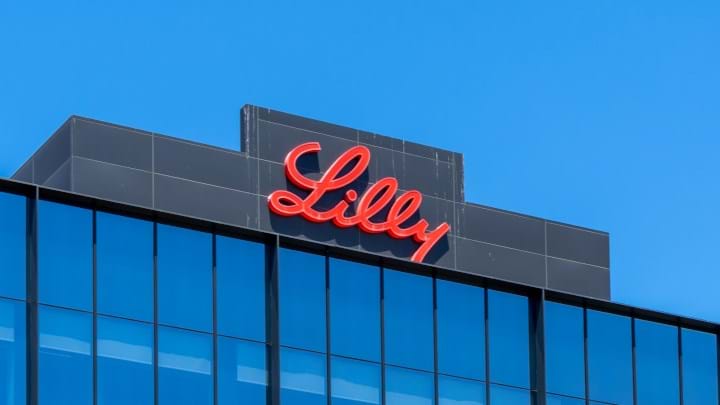
In the 2010s Eli Lilly had been facing significant struggles, having to lay off more than 5600 employees in 2011 [1]. On November 11th this year, Eli Lilly has become the first healthcare company to reach a $1 trillion valuation [2].
Eli Lilly has had a long history in the pharmaceutical industry however it has only recently gained significant attention. There were serious concerns over the future of the 148 year old company, especially when its top-selling drug Prozac, an antidepressant*,* lost patent exclusivity. Prozac accounted for a quarter of the company’s revenue at that time. Even worse, after a few years four more drugs that made up half their revenue went generic. Eli Lilly has also had many high-profile and extremely costly drug recalls, which harmed the reputation of the company. For example, Semagacestat was an Alzheimer’s drug that failed clinical trials and even caused patients’ conditions to worsen while on the medication [1]. Eli Lilly’s current success stands out as its growth is driven by a small number of extremely successful drugs, rather than a broad portfolio or steady diversification like other biopharma companies such as AstraZeneca or Pfizer.
The extremely high demand for Mounjaro and Zepbound which are all manufactured by Eli Lilly contributed to significant market share and revenue growth.
However, global demand for these weight-loss drugs outstripped the actual supply that Eli Lilly had, which lead to shortages in many regions, therefore Eli Lilly has had to invest billions in expanding manufacturing facilities. Its competitor Novo Nordisk, which manufactures Ozempic and Wegovy, has had its stock performance and market share surpassed by Eli Lilly. This is due to Eli Lilly being able to quickly scale up its distribution and manufacturing, whereas Novo faced huge supply shortages due to the high demand [3].
Eli Lilly has faced problems with supply shortages of Mounjaro and Zepbound, causing share price volatility and pushing the stock toward its worst annual performance since 2008 [4]. However, it is likely that the company will continue to see steady demand for its drugs as healthcare systems are increasingly dependent on weight-loss therapies.
Furthermore, in 2026 Lilly is expected to launch a new drug called Orgorglipron, which is a weight loss drug that can be taken once daily by mouth, with no need for special storage or refrigeration [5]. This differs greatly from other weight loss therapies as it is much more accessible, and cheaper to manufacture and distribute as it is a non-peptide, small-molecule drug, unlike most injectable weight loss drugs.
Lilly’s $1 trillion valuation shows how central obesity and metabolic drugs have become in the pharmaceutical industry. Their sudden rise shows other biopharma companies that these drugs are one of the most profitable and strategically important areas to invest in in the biopharma industry. The valuation also highlights how operational agility is critical, and should not be an afterthought. Lilly’s ability to rapidly scale manufacturing allowed it to outrun competitors like Novo Nordisk.