
Johnson & Johnson (J&J) announced on 14 October 2025 that it will separate its orthopaedics division into a standalone company called DePuy Synthes¹. This strategic move, following a similar decision in 2023 to demerge the consumer health brand Kenvue, underscores the company’s commitment to higher growth and innovation. The question most investors now face is whether this bold step, letting a $9.2 billion business go, will increase J&J’s brand value or be another step towards the company decreasing its diversification without growth.
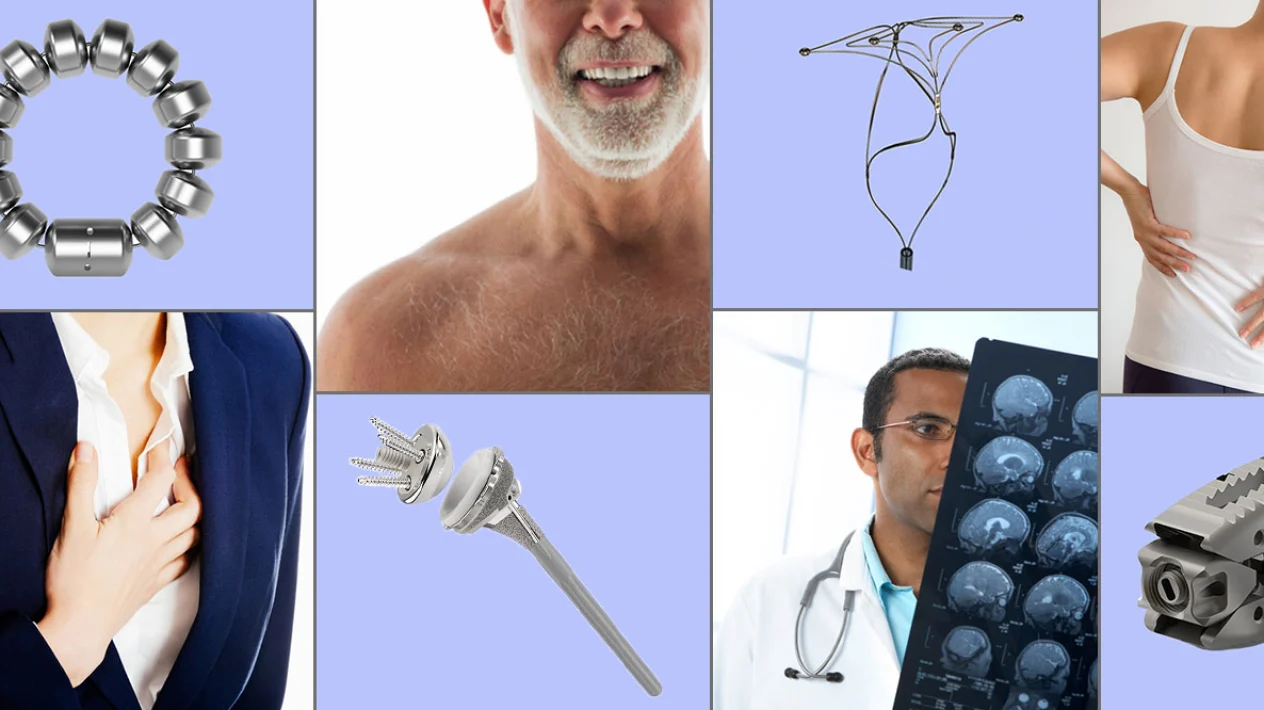
Orthopaedics focuses on treating conditions of the bones, joints, and muscles through implants and surgical devices. It is part of the wider medical technology (MedTech) sector, which develops tools used in diagnosis and treatment. Unlike surgical robotics, which relies on software and automation to guide procedures, orthopaedics is a product-based field driven by implants and surgical volumes rather than technological innovation.
J&J’s orthopaedics business generated approximately $9.2 billion² in fiscal year 2024, yet has consistently underperformed relative to the company’s other MedTech segments. While the division showed modest improvement with growth in Q3 2025, this remains insufficient for a company expecting total revenue growth to exceed 5% in 2026, above current analysts’ estimates of 4.6%³.
This reflects not execution failures, but structural market challenges. Hip and knee replacement procedures face pricing pressures from hospital consolidation and government reimbursement scrutiny in mature markets. Innovation cycles remain incremental, limiting premium pricing opportunities that drive margins in pharmaceuticals or advanced medical technology.
J&J’s post-separation strategy concentrates on six domains: oncology, immunology, neuroscience, cardiovascular, surgery, and vision⁴. This narrowing reflects the company’s belief that competitive advantage emanates from therapeutic depth rather than portfolio breadth. The separation enables resources to be invested towards higher-return opportunities. Cardiovascular technologies benefit from the ageing population and the rising prevalence of chronic diseases. Surgical robotics requires sustained R&D investment, which orthopaedics may dilute, promising a bright future for J&J in these areas.
Separation creates strategic flexibility previously unavailable. Serving a $50 billion global market⁵, DePuy Synthes can pursue partnerships and acquisitions aligned with the evolution of orthopaedic technology. This independence allows DePuy Synthes to focus on its core business, potentially accelerating innovation and growth. CFO Joe Wolk’s acknowledgement that “the next phase of innovation in orthopaedics may be beyond J&J’s current scope” admits the company’s corporate prioritisation constrained strategic options⁶. However, independence also introduces vulnerabilities, as DePuy Synthes inherits restructuring challenges, including the $700-800 million⁷ cost programme involving manufacturing consolidation and workforce reductions.
The appointment of Namal Nawana, former Smith & Nephew CEO (a leading MedTech company), as “Worldwide President”⁸ signals serious intent. His mandate likely includes accelerating surgical robotics development and acquiring complementary technologies that would have conflicted with J&J’s broader priorities. However, standalone companies lack the financial resilience of diversified conglomerates during market downturns. The entity must show independent credit facilities and corporate infrastructure whilst competing against well-established rivals, including Stryker, Zimmer Biomet, and Smith & Nephew.
J&J’s decision highlights a broader shift in healthcare toward specialising in specific treatment areas. Companies that try to do everything are now under pressure to show that their different parts actually work better together. When those connections aren’t clear, it often makes more sense to split up. This is especially true for large pharmaceutical and medical device firms with older, mixed portfolios built over years of M&A (Mergers & Acquisitions).
Investor response to the split proved muted, with J&J shares declining on announcement day before stabilising⁹, even though the stock is up by 30% this calendar year. This lacklustre reaction reflects uncertainty about whether removing 10% of revenue enhances growth or reduces scale. The separation’s success rests on whether both entities achieve superior performance independently. For J&J, this requires demonstrating accelerated growth in the remaining MedTech segments. For DePuy Synthes, success means proving focused management can revitalise growth in a mature market. The 18-24 month timeline until completion provides limited visibility, leaving investors to evaluate strategic direction rather than concrete outcomes.
In the long run, however, the split could unlock sustained value if each business delivers stronger growth within its specialised domain. Success will depend on execution, with J&J focusing on high-growth areas and DePuy Synthes proving its independence can drive new innovation and increase its respective competitiveness.